

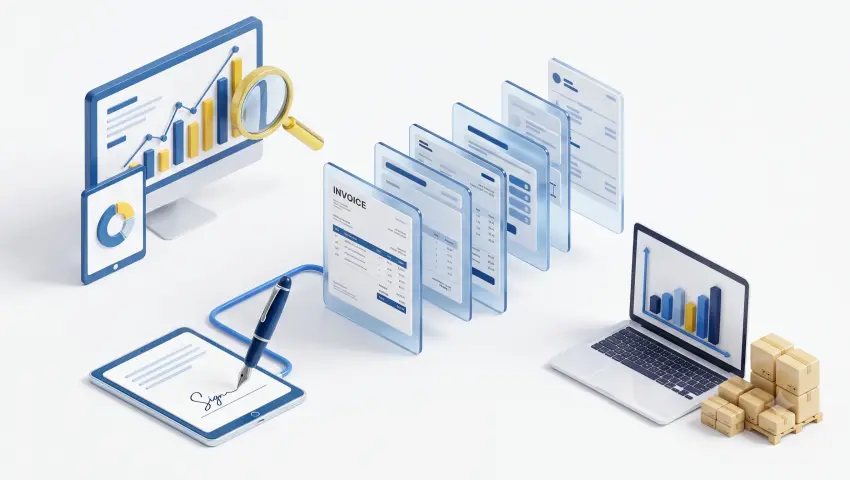

UAE E-Invoicing Guide for TallyPrime Users
The UAE is moving towards a structured electronic invoicing ecosystem where invoice data is exchanged electronically between businesses and reported through the UAE e-Invoicing framework.
For businesses using TallyPrime, the challenge is not simply creating an invoice. The bigger requirement is preparing accounting data, business workflows, integrations and invoice processes for the evolving UAE e-Invoicing ecosystem.
This guide explains what UAE e-invoicing means for TallyPrime users, what businesses need to prepare, and how Pragyantra can help with integration and automation.
What Is UAE E-Invoicing?
According to the UAE Ministry of Finance and Federal Tax Authority, an e-Invoice is structured invoice data issued and exchanged electronically between the supplier and buyer and reported electronically to the Federal Tax Authority.
This means businesses need to think beyond traditional invoice generation. The focus shifts towards:
- Structured invoice data
- Electronic data exchange
- System interoperability
- Invoice validation
- Automated workflows
- Reporting requirements
For businesses using TallyPrime, this creates a growing need to assess how accounting data and business systems can support UAE e-Invoicing requirements.
What UAE E-Invoicing Means for TallyPrime Users
TallyPrime has introduced UAE-specific e-Invoicing capabilities in Release 7.1, including:
- Configuration of relevant company and master data
- Recording transactions with e-Invoice details
- Reviewing e-Invoice information through dedicated reports
- Identifying incomplete or incorrect e-Invoice details
However, TallyPrime's native features may not cover all business requirements.
Businesses may still need to consider broader requirements such as:
- Existing business software and ERP connectivity
- CRM integration
- Custom invoice workflows
- Data preparation and validation
- Third-party integrations
- Automation and monitoring requirements
This is where a specialized TallyPrime integration strategy becomes important.
Why UAE Businesses Need TallyPrime E-Invoicing Integration
Many businesses currently follow a traditional invoice workflow:
- Create invoice in accounting software
- Generate PDF
- Send invoice by email or WhatsApp
- Manual follow-up
- Manual data verification
This workflow involves multiple manual steps. As businesses prepare for structured electronic invoicing, the workflow increasingly requires better data accuracy, system connectivity and automation.
Traditional Workflow
- Manual Data Entry: Employees enter similar information across multiple systems
- Multiple Software Systems: TallyPrime, CRM, ERP, e-commerce platforms, warehouse software
- Missing Invoice Information: Structured electronic workflows require accurate information
- Manual Transmission: Employees spend significant time transferring information between systems
- Limited Visibility: Difficulty tracking pending invoices, exceptions, and processing status
Future-Ready Workflow
- Invoice created in TallyPrime or connected system
- Invoice data validation
- Integration layer / API
- E-Invoicing service provider workflow
- Structured invoice exchange
- Reporting and status monitoring
How TallyPrime E-Invoicing Integration Works
Every business has a different accounting environment. Some businesses use only TallyPrime. Others use CRM, ERP, e-commerce platforms, payment systems, inventory software, and custom applications.
The objective of integration is to create a smoother flow of relevant data between systems.
Typical Integration Architecture
- Business Applications → CRM / ERP / Website
- Integration & Automation Layer → Data transformation and validation
- TallyPrime → Accounting and invoice data
- E-Invoice Data Workflow → Structured data preparation
- Approved E-Invoicing Ecosystem → Transmission and reporting
- Business Reporting & Monitoring → Status tracking and analytics
The final architecture depends on the business's technology stack and regulatory requirements.
Automated E-Invoice Transmission
- Step 1: Invoice is created in TallyPrime or another connected system
- Step 2: Relevant data is prepared and structured
- Step 3: Data validation checks required information
- Step 4: Integration workflow transfers data
- Step 5: Transmission through configured electronic workflow
- Step 6: Status monitoring identifies transactions requiring attention
What Businesses Should Prepare
Businesses should not wait until implementation deadlines approach. A practical preparation process includes reviewing:
Company Information
Ensure required business information is accurate. TallyPrime's UAE e-Invoicing configuration includes requirements around business information and applicable VAT and registration details. (TallyHelp)
VAT and Registration Information
Review relevant registration information and master data.
Party Information
Review customer and supplier records.
Product and Service Information
Ensure relevant information is properly configured.
Invoice Workflow
Understand how invoices are created, approved, sent, recorded, and monitored.
Software Integrations
Identify systems connected with accounting operations.
UAE E-Invoicing Rollout Timelines
The UAE Ministry of Finance has announced a phased implementation approach for the Electronic Invoicing System.
| Phase | Business Category | Timeline |
|---|---|---|
| Phase 1 | Revenue ≥ AED 50 million | From 1 January 2027 (Appoint ASP by 31 July 2026) |
| Phase 2 | Revenue below AED 50 million | Later phases (dates to be announced) |
| Government | Government entities | Separate implementation timelines |
Important: Businesses should always confirm their specific obligations using the latest official Ministry of Finance information. (وزارة المالية - الإمارات العربية المتحدة)
Challenges Without Proper Integration
- Manual Data Entry: Employees may need to enter similar information across multiple systems, increasing processing time, human errors, and duplicate work.
- Multiple Software Systems: A business may use TallyPrime, CRM, ERP, e-commerce platforms, and warehouse software — all disconnected.
- Missing Invoice Information: Structured electronic workflows require accurate information. Missing details can create processing delays, manual corrections, and operational inefficiencies.
- Manual Transmission: Without automation, employees spend significant time transferring information between systems.
- Limited Visibility: Businesses struggle to track pending invoices, transactions requiring corrections, data exceptions, and processing status.
How Pragyantra Can Help
Pragyantra provides technology and integration support for businesses looking to connect their accounting workflows with relevant business systems.
Our Solution Approach
1. TallyPrime Integration Assessment
We analyze current TallyPrime setup, existing business applications, invoice workflow, data sources, and required automation to define the correct integration architecture.
2. Invoice Data Workflow Design
We identify where invoice data originates, which data fields are required, where validation should occur, and which systems need connectivity.
3. Accounting Software E-Invoice Integration
We develop workflows based on business requirements, integrating accounting software with CRM, ERP, e-commerce systems, and custom applications.
4. API Integration
TallyPrime supports different integration approaches, including XML over HTTP and newer JSON-based integration capabilities. TallyPrime Release 7.0 introduced native JSON support for structured data exchange. (TallyHelp)
5. Automated E-Invoice Workflows
We configure automation around suitable business processes, including invoice data preparation, data synchronization, data validation, status monitoring, exception identification, and automated notifications.
Key Features of Our Solutions
- Automated Data Synchronization: Reduce repetitive manual transfer of data between connected systems
- Invoice Data Validation: Identify missing or incomplete information before the transaction moves through the configured workflow
- TallyPrime Integration: Connect relevant TallyPrime data with external business systems
- API Connectivity: Build connections between websites, CRM systems, ERP platforms, accounting applications, and business applications
- Workflow Automation: Automate repetitive operational steps where appropriate
- Exception Monitoring: Identify invoices or transactions that require attention
- Business Reporting: Create reporting workflows to help management monitor relevant invoice and business information
TallyPrime Integration Technologies
Depending on the TallyPrime version and technical requirements, integrations may use:
- XML
- HTTP
- JSON (native support in Release 7.0 and above)
- APIs
- TDL (Tally Definition Language)
- Middleware applications
- Custom web services
Reference: TallyPrime JSON Integration Documentation
Benefits of UAE E-Invoicing Automation
- Reduce Manual Work: Automation reduces repetitive data handling between multiple systems
- Improve Data Consistency: Integrated workflows reduce duplicate entry of the same information
- Faster Processing: Automated workflows help reduce delays associated with manual processes
- Better Business Visibility: Centralized monitoring makes it easier to identify transactions requiring attention
- Scalable Operations: As invoice volumes increase, automated workflows help businesses manage higher processing requirements
Frequently Asked Questions
What is UAE e-Invoicing TallyPrime integration?
UAE e-Invoicing TallyPrime integration refers to preparing or connecting relevant TallyPrime accounting and invoice data workflows with systems used for structured electronic invoicing, based on applicable technical and regulatory requirements.
Can TallyPrime support UAE e-Invoicing?
TallyPrime Release 7.1 includes UAE e-Invoicing features for configuring relevant company and master information, recording transactions with e-Invoice details and reviewing e-Invoice information. The exact implementation and external exchange process should be evaluated according to the applicable UAE framework. (TallyHelp)
Is a PDF invoice considered an e-Invoice in the UAE?
No. UAE authorities describe an e-Invoice as structured electronic invoice data. Unstructured formats such as PDF files, Word documents, images, scanned copies and emails are not considered e-Invoices. (وزارة المالية - الإمارات العربية المتحدة)
Can TallyPrime connect with other software?
TallyPrime supports multiple integration technologies and can exchange data with external applications through supported methods such as XML and JSON-based workflows. (TallyHelp)
How long does a TallyPrime integration project take?
The timeline depends on the complexity of existing software, number of integrations, data requirements, automation requirements and testing requirements. A technical assessment is recommended before estimating the timeline.
What should businesses prepare?
Businesses should review company information, VAT-related details, party information, product information and existing invoice workflows.
Final Thoughts
The shift toward structured electronic invoicing is not just a compliance requirement — it's an opportunity to modernize accounting workflows, reduce manual effort, and improve business visibility.
For TallyPrime users, starting early with integration and automation preparation can make the transition smoother.
If your business uses TallyPrime and you need help understanding your integration and automation requirements, Pragyantra can assess your existing workflow and recommend a suitable technical approach.
Related Services
- Tally Integration Services — Integrate TallyPrime with external applications and business systems
- API Integration Services — Connect business applications using APIs and automation workflows
- Business Automation Services — Reduce repetitive work with automated workflows
- AI Business Dashboard — Monitor important business data through centralized dashboards
🏢 Pragyantra Solutions | Phone: +91 77280 57558 | Web: www.pragyantra.com